Design System
v1.0
Design System 1.0
Problem Statement
Our digital system included multiple products with inconsistent designs, leading to a disunified user experience and slower development.
Objectives
Establish a unified design language across all digital products.
Enhance consistency and usability throughout the platform.
Improve collaboration between design and development teams.
Streamline the design and development process to boost efficiency.
Solution
Audit and Inventory: Conducted a comprehensive review of existing design assets to identify inconsistencies.
Design Principles and Guidelines: Established foundational design principles to guide the system.
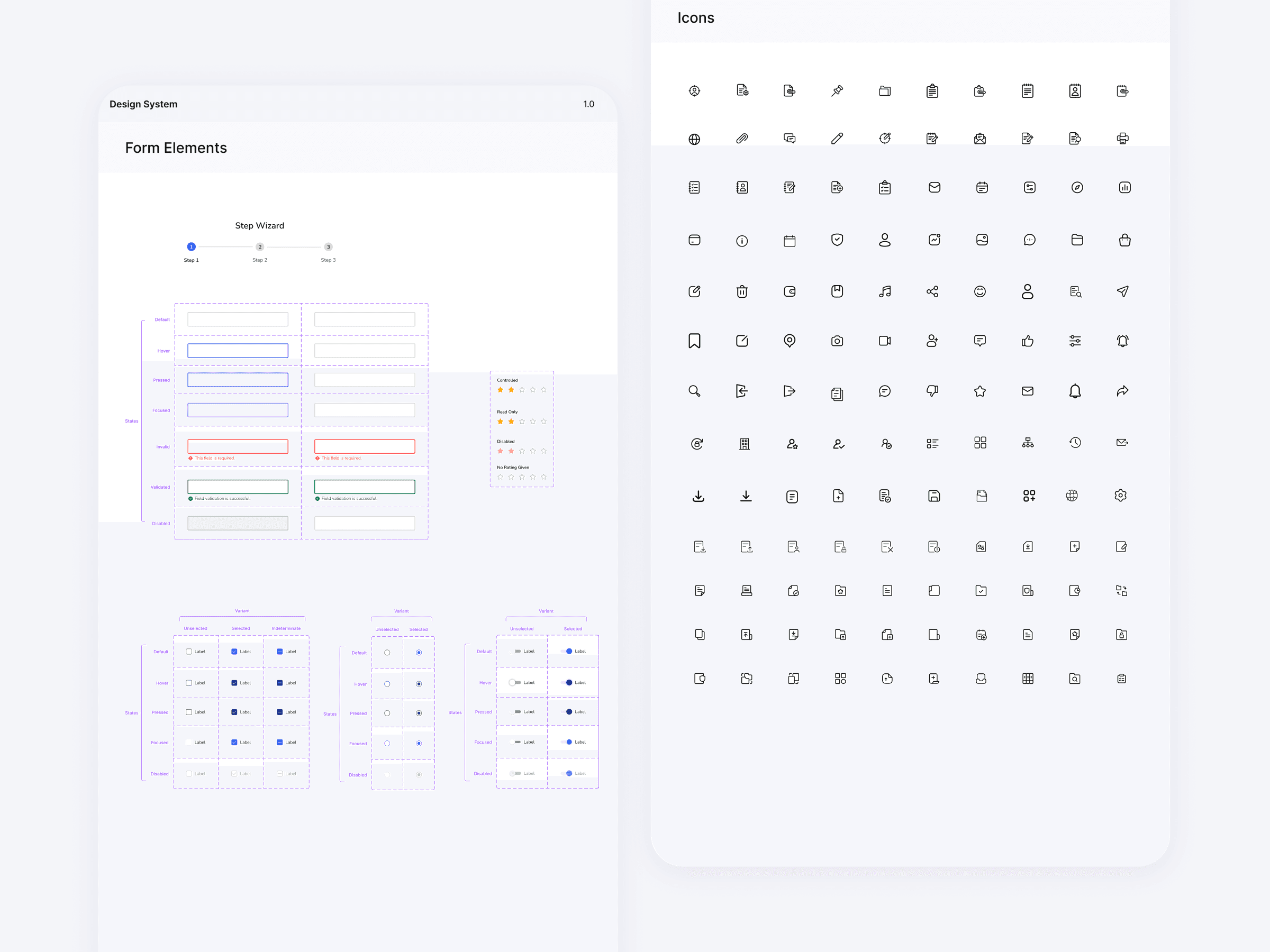
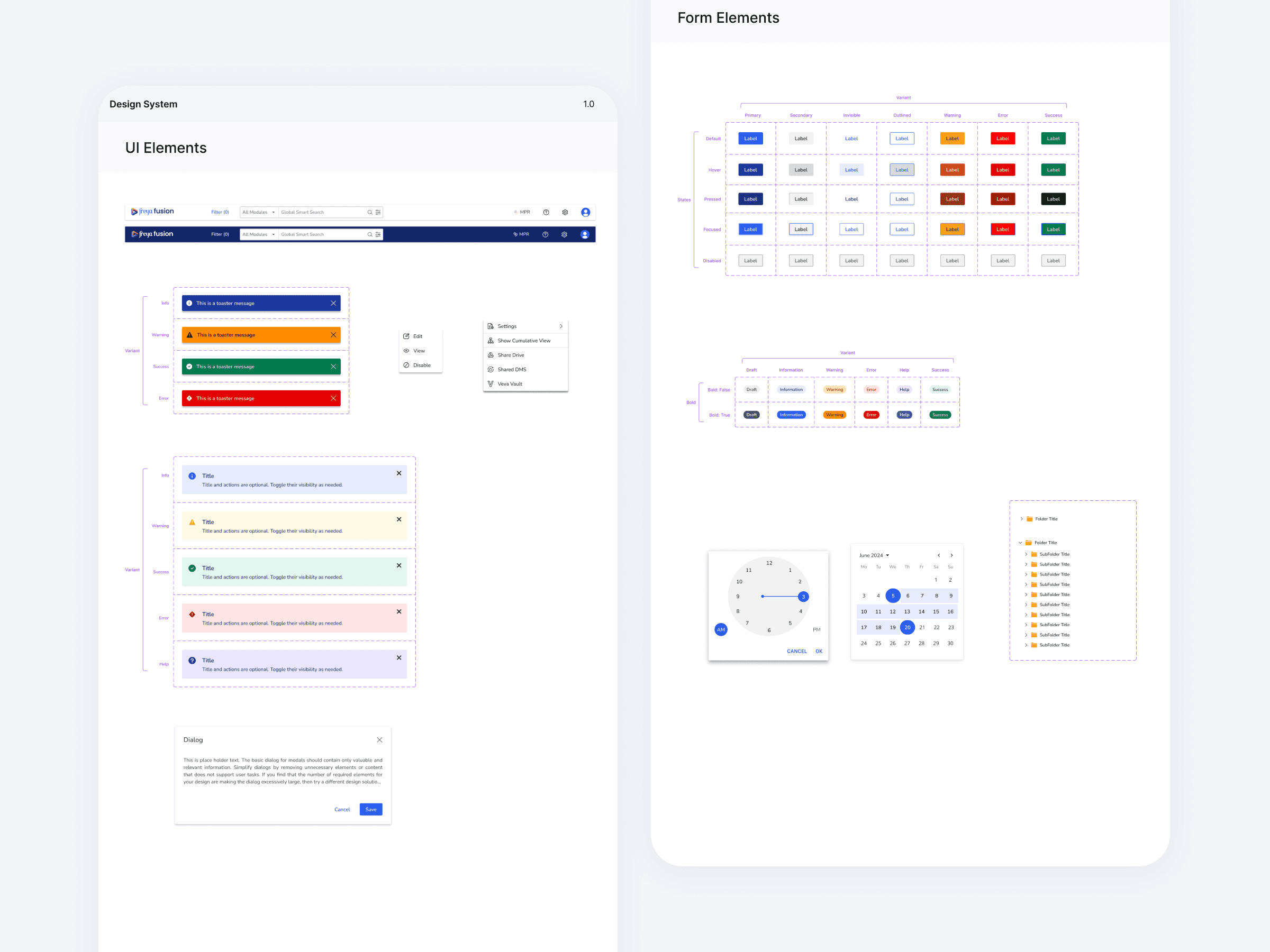
Component Library: Developed a repository of reusable UI components.
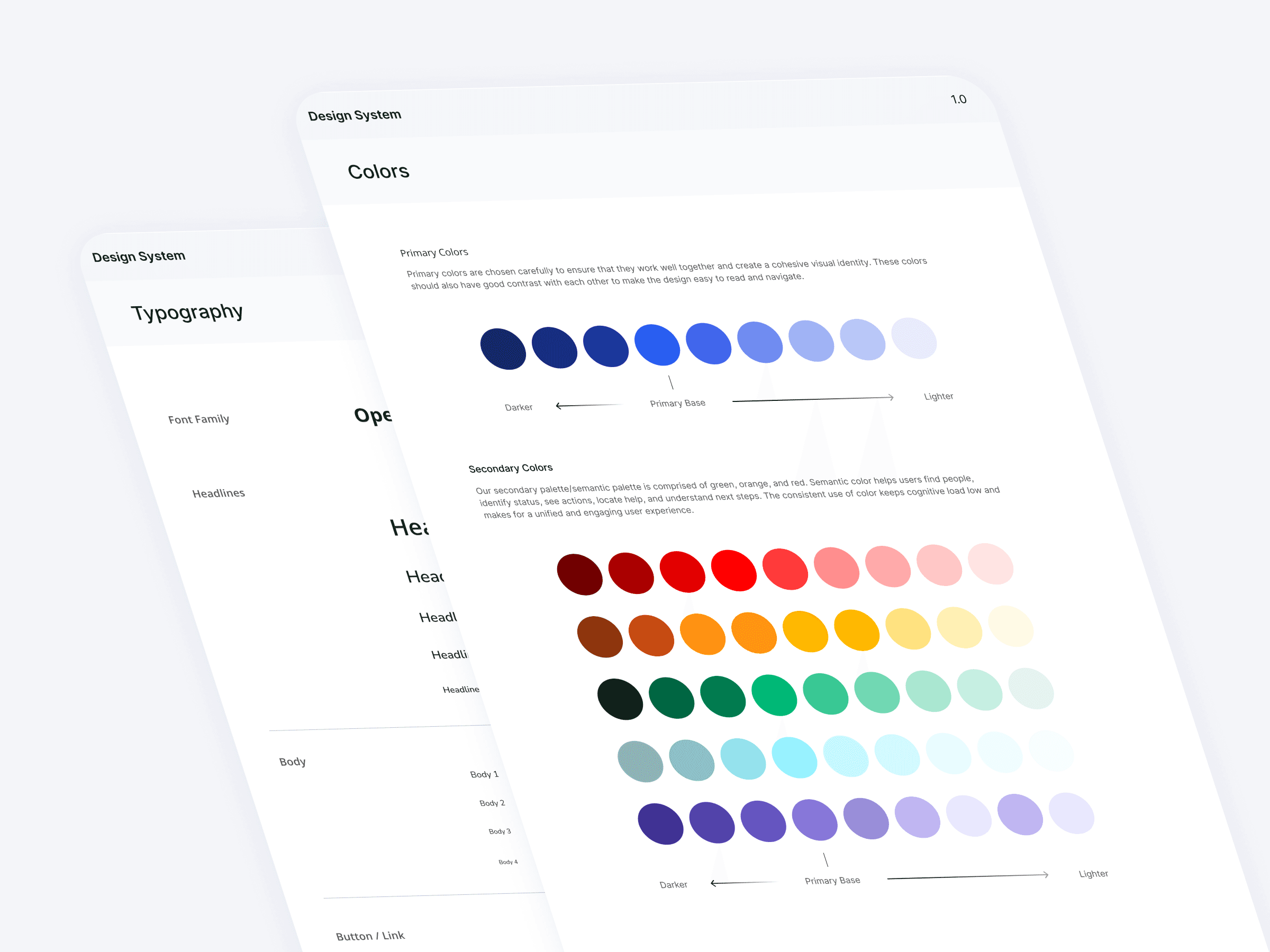
Typography and Color System: Defined a consistent typographic scale and color palette.
Iconography and Imagery: Created a standardized set of icons and imagery guidelines.
Design Tokens: Implemented design tokens for consistent styling across platforms.
Documentation and Guidelines: Compiled detailed documentation to facilitate adoption.
Collaboration and Training: Organized workshops and training sessions for team members.
Implementation and Integration: Integrated the design system into existing workflows and products.
Continuous Improvement: Established a feedback loop for ongoing enhancements.
Process
Research and Analysis
Conducted audits and gathered feedback from stakeholders, including designers, developers, and product managers, to understand their pain points and requirements.
Design Principles and Guidelines
Defined principles focusing on consistency, scalability, and user-centric design.
Established guidelines for typography, color schemes, iconography, and spacing to ensure uniformity.
Component Library
Developed reusable UI components with a focus on accessibility and responsiveness.
Documentation
Created Detailed guidelines outlining component usage and best practices.
Implementation & Testing:
Collaborated with development teams to integrate the system and conducted usability testing to validate effectiveness.
Outcome
Consistency: Achieved a uniform look and feel across all digital products.
Collaboration: Improved collaboration between designers and developers through clear documentation and a shared understanding of design principles.
Efficiency: Reduced design and development time by providing a centralized repository of reusable components and guidelines.
Scalability: Established a scalable system adaptable to future growth.
Impact
User Experience: Improved user satisfaction due to a cohesive interface.
Development Time: The time required to develop new features and products decreased, thanks to the reusable components and clear guidelines.
Team Alignment: Promoted better alignment and communication within product teams.
Conclusion
“The development of Design System v1.0 addressed critical challenges in design consistency and efficiency, laying a robust foundation for future growth and innovation”
Thank You
For Watching